
Britain’s Keir Starmer and U.S. Democrats say it’s illegal to strike Iran. Is it?


What do Reps Alexandria Ocasio-Cortez, Rashida Tlaib, Ilhan Omar, and UK Prime Minister Keir Starmer all have in common?
They’re all using lawfare to (effectively) protect Iran. And they’re all going to fail.

Photo: UK Prime Minister Kier Starmer via: Flickr
International law
Keir Starmer and government legal advisors have concluded that a strike on Iran would be “preemptive,” and therefore may be prohibited under international law, prompting the UK to refuse United States usage of the critical RAF airbase at Diego Garcia.
Preemptive strikes are sometimes permitted under a body of law called the Caroline Doctrine, which we’ve previously explored in depth. However, in this case America has an even stronger argument: a strike on Iran is not preemptive at all, because the countries are already at war.
Iran’s President Masoud Pezeshkian declared in December, “we are in a full-fledged war with America, Israel, and Europe,” even as Iranian officials continue to scream “Death to America” in the halls of Parliament, and on the streets.
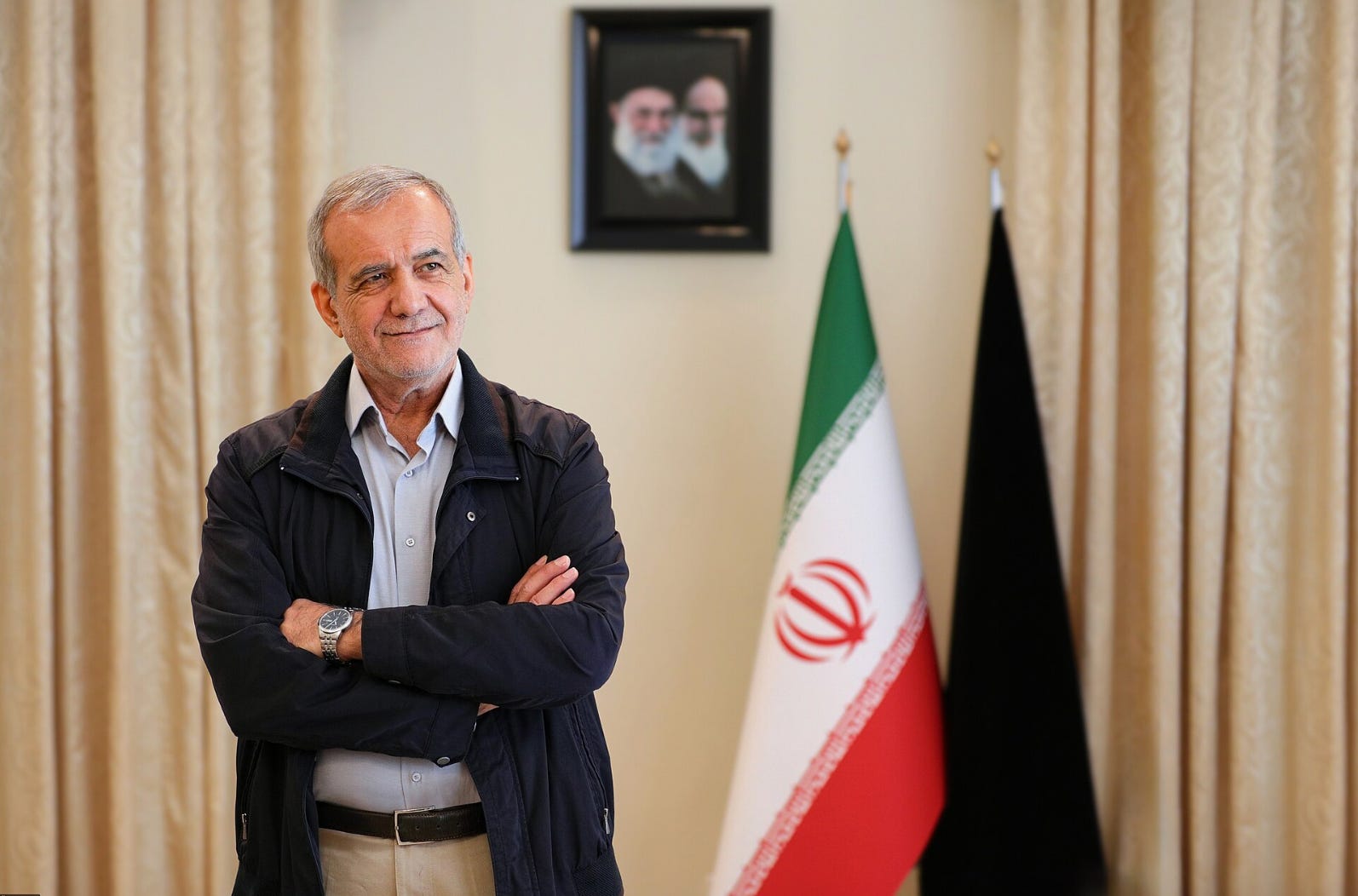
Photo: Iranian President Masoud Pezeshkian by khamenei.ir via Wikimedia Commons.

Against this backdrop, Iran is also taking concrete, kinetic, belligerent actions:
-
Working to build nuclear weapons in violation of international treaties;
-
Working to build long range ballistic missiles capable of hitting the United States;
-
Killing hundreds of Americans via its proxy network including in Lebanon and Iraq; and
-
Firing massive ballistic missile barrages on Israel (a U.S. ally) as well as on U.S. bases.

Photo: An Iranian missile strikes Tel Aviv on June 13, 2025: Tomer Neuberg/AP.
The Tadić doctrine of International law clearly states that an armed conflict does not end merely due to a pause in active hostilities, but extends until there is an official, general conclusion of peace. Neither Iran nor the United States have come to any such conclusion.
Accordingly, a U.S. strike is legally considered self defense: against an enemy that is already engaged in active war, and firmly committed to America’s destruction.
U.S. law sides with the President
American critics of military action in Iran have called it “stupid,” and “blatantly unconstitutional.” Meanwhile, pollsters misleadingly ask Americans if they think the President has military authority, as if Constitutional law was determined like the winner of a reality show. (It is not.)
Critics raise two, equally ineffective arguments: one is that under the U.S. Constitution, only Congress may declare war, and the other is that the President must obtain Congressional approval for military action under the 1973 War Powers Resolution.
The U.S. Constitution gives Congress the exclusive power to declare war (Article I, Section 8) BUT ALSO declares the President as Commander-in-Chief of the armed forces (Article II, Section 2). The last time Congress declared war was World War II, and since then, Presidents from both parties have carried out dozens of military actions all over the world without declaring an official “war.” The Supreme Court has consistently upheld this practice as Constitutional.
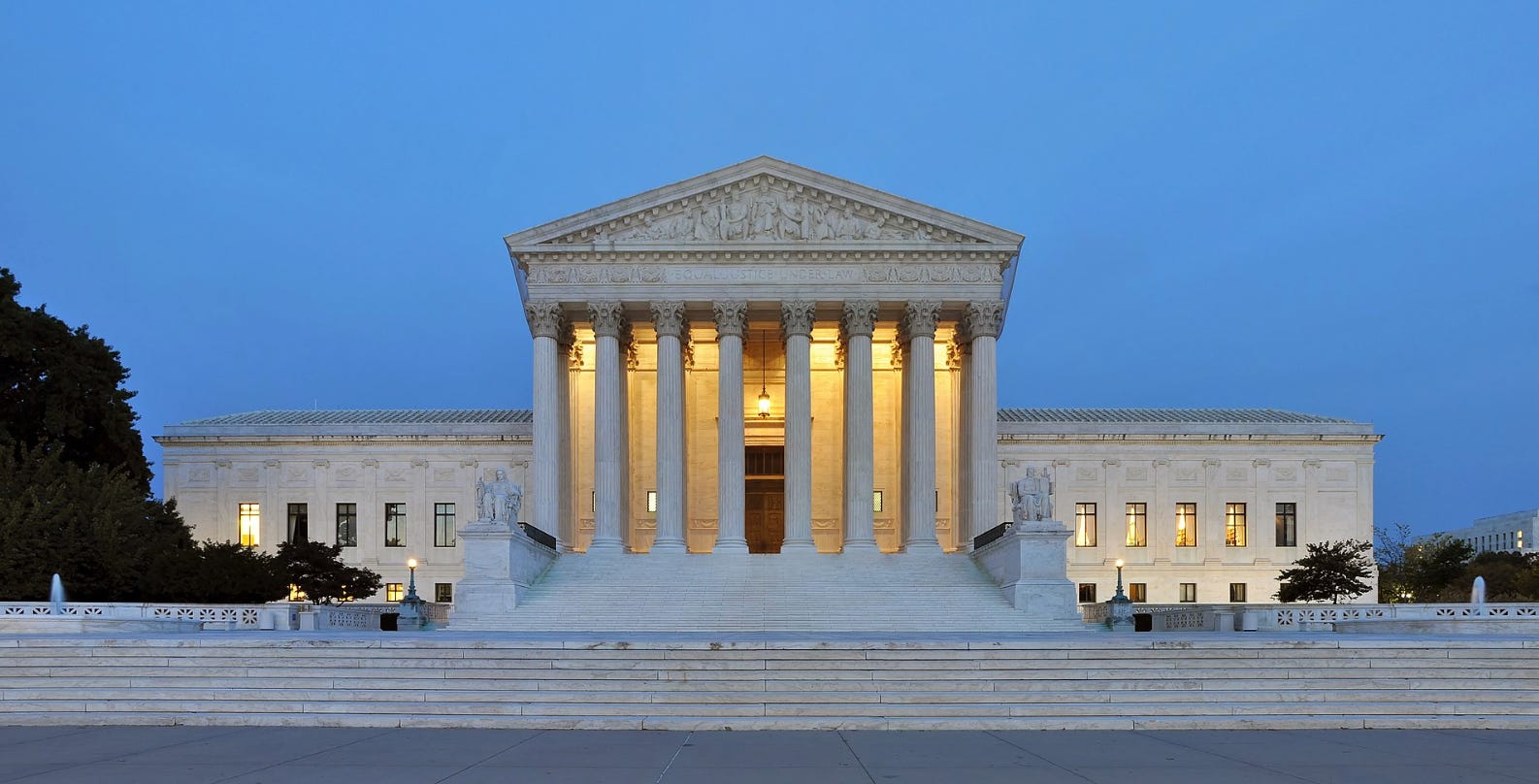
Photo: United States Supreme Court by Joe Ravi via Wikimedia Commons.

The 1973 War Powers Resolution will not help the critics either. The Resolution requires the President to inform Congress within 48 hours after a military action begins (not before), and to obtain Congressional approval only if such action lasts more than 60 days. Yet Presidents Clinton (in Kosovo) and Obama (in Libya) carried out military actions longer than 60 days without Congressional approval, and in both cases Federal courts refused to intervene.
Some critics naively dismiss the court refusals to intervene as irrelevant, because they involved what’s called the “Political Question” doctrine. Yet actual legal scholars know the truth: regardless of the specific reason for not interfering, the courts simply will not do it — two precedents make this abundantly clear. Thus, the President retains effective power as Commander-in-Chief, notwithstanding the 1973 Resolution.
Perhaps knowing the futility of their own legal arguments, members of Congress are attempting to pass new laws. That won’t help them either.
The notoriously anti-Israel Congressional group known as “The Squad” (Reps. Alexandria Ocasio-Cortez, Rashida Tlaib, and Ilhan Omar), as well as 11 other House members, co-sponsored a Resolution meant to block U.S. President Donald Trump from carrying out military action against Iran. Some Republicans, such as Rep. Thomas Massie and Sen. Rand Paul have introduced similar resolutions of their own.
All of these resolutions have one thing in common: they’re completely impotent.
The Squad’s resolution is what’s called a “Concurrent Resolution,” meaning it is merely symbolic, and will have no legal effect even if it passes. Other proposals are “Joint Resolutions,” meaning they require either the President’s signature, or support from two thirds of Congress in order to override a Presidential veto. Put simply: these resolutions have absolutely no chance of passing into actual law.
Both internationally and domestically: why doesn’t the White House say all this?
When asked about these issues, the U.S. administration has been notoriously low key: intentionally referring to its prerogative to engage in “preemptive strikes,” if necessary, and stating domestically that the White House will “comply with the applicable laws” regarding Congress.
Given the strong legal arguments in support of the White House position, why is the administration’s response so minimal?
The U.S. administration has expressed significant dissatisfaction with international institutions, including their failure to stop wars or address terrorism. Just one example: the massacre of over 30,000 protesters in Iran cannot possibly get a fair hearing at the U.N. Security Council, because Iran’s main military sponsors, China and Russia, both exercise veto power. Even if America is in the right, merely engaging in this debate would give undeserved credibility to these international intuitions.
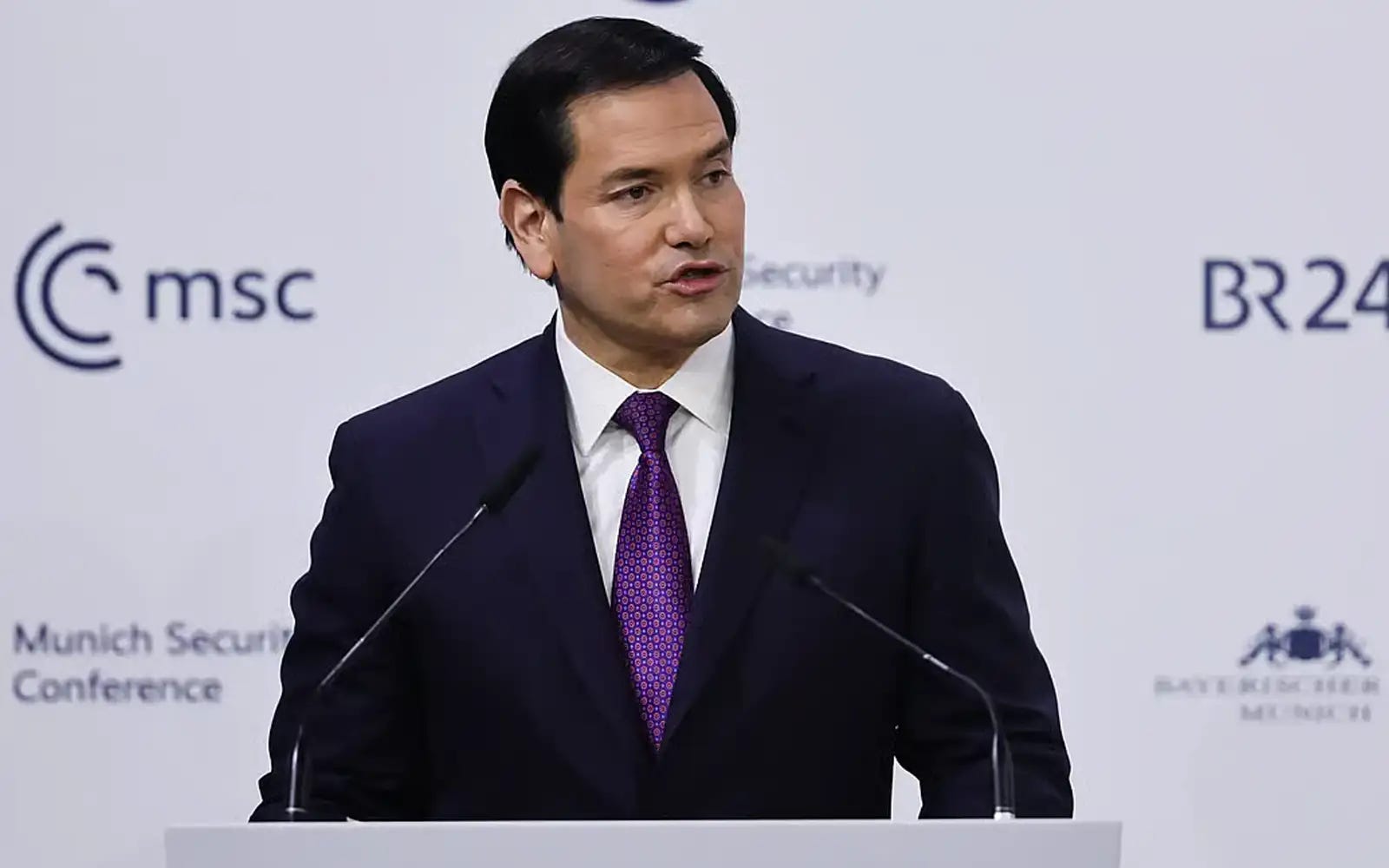
Photo: U.S. Secretary of State Marco Rubio expresses U.S. positions at the Munich Security Conference by Free Malaysia Today under Creative Commons 4.0.
Incidentally, from an Israeli point of view, these same institutions were utterly ineffective at preventing the October 7 massacre, the growth of the relevant terror organizations, and the ensuing seven front war against Israel’s very existence.
As for the domestic question, there is no legal avenue that can effectively interfere with the President’s authority in this area, leaving only the question of popular appeal and politics.
As the old saying goes, “Nothing succeeds like success.” Support for prior U.S. operations in Venezuela and Iran skyrocketed after each produced a successful result. The President currently enjoys narrow support within his Republican base for military action against Iran, and that support would likely skyrocket if an operation were to succeed – just in time for the midterm elections.
In short, the White House has legal authority, both internationally and domestically, for a military action against Iran, yet also has a strong interest in not over-explaining its position, at least for now.