


Iran launched a massive crackdown on anti-regime protesters beginning on January 8, with the latest numbers indicating tens of thousands killed. U.S. President Donald Trump declared that the United States would “come to [the protesters’] rescue” including the phrase, “locked and loaded.” In the following weeks we have seen long delays and U.S. negotiations with the regime, but also a significant military buildup and new sanctions. So what’s actually happening?
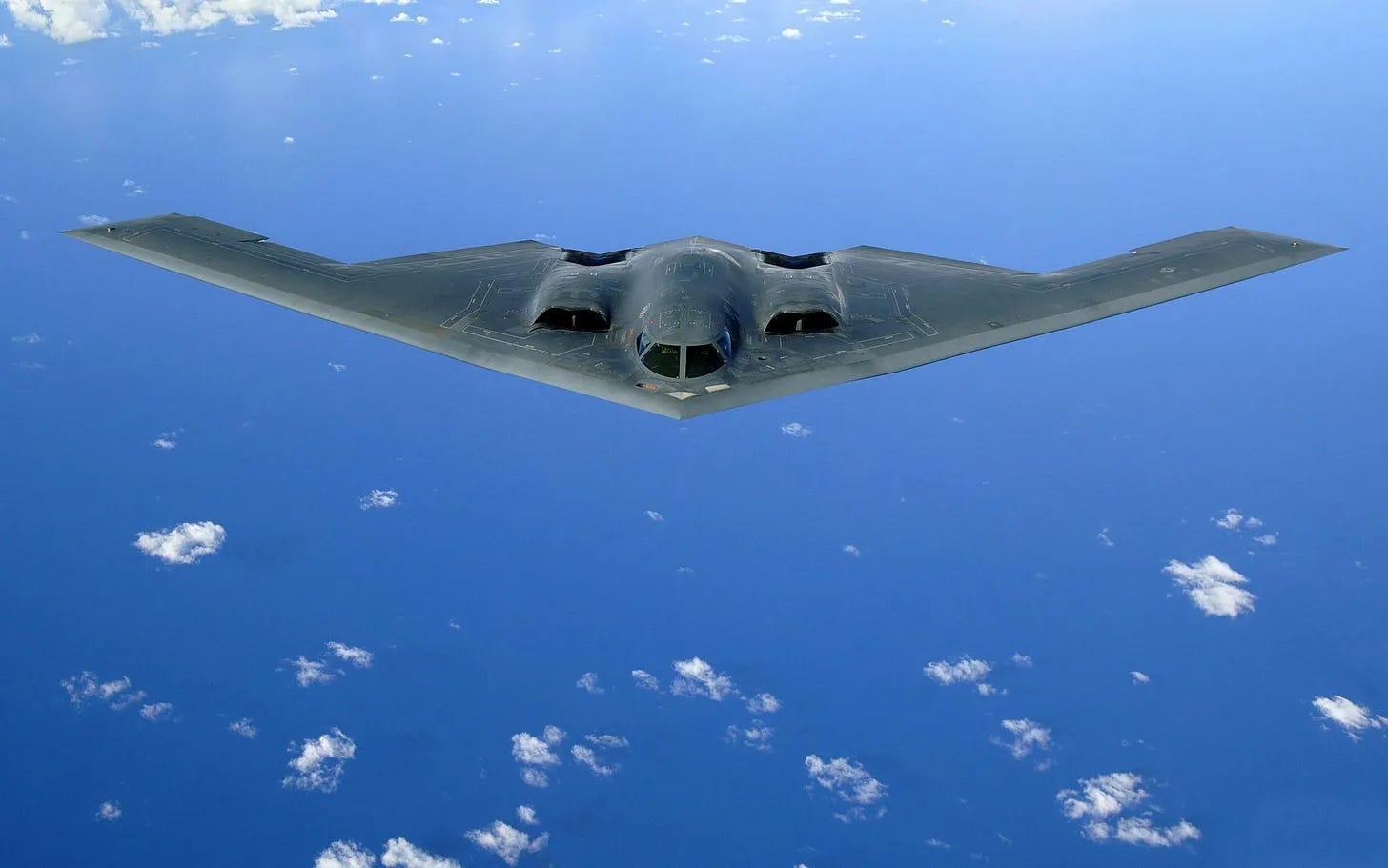
Photo: American B-2 Bomber of the type previously used against Iran’s nuclear program, via Pexels.
Israeli Prime Minister Benjamin Netanyahu returned this week from his seventh visit to the White House during the current U.S. administration.
There are no shortage of analysts “telling” us what the Prime Minister discussed with U.S. President Donald Trump, particularly emphasizing efforts to lobby Washington over Israel’s needs and red lines. Yet all of these analysts have one thing in common: none of them were in the room. Aside from the typical generic public statements, the actual participants have actually been notoriously tight lipped.
We’ve said this before and now we’ll say it again: when the sports announcers are doing a bad job, a true fan turns off the sound and watches the action.
Here’s the story that we see from the action:
The Israeli Prime Minister’s visit was only the most recent of many others, not only by senior leadership, but operational planners – the people who actually carry out policy on the day-to-day working level. Such operational meetings included U.S. CENTCOM Commander Brad Cooper and IDF Chief of Staff Eyal Zamir, as well their respective military staffs. On the political side, meetings included U.S. Secretary of State Marco Rubio and Israeli Foreign Minister Gideon Sa’ar, U.S. negotiators Steve Witkoff and Jared Kushner, and others.
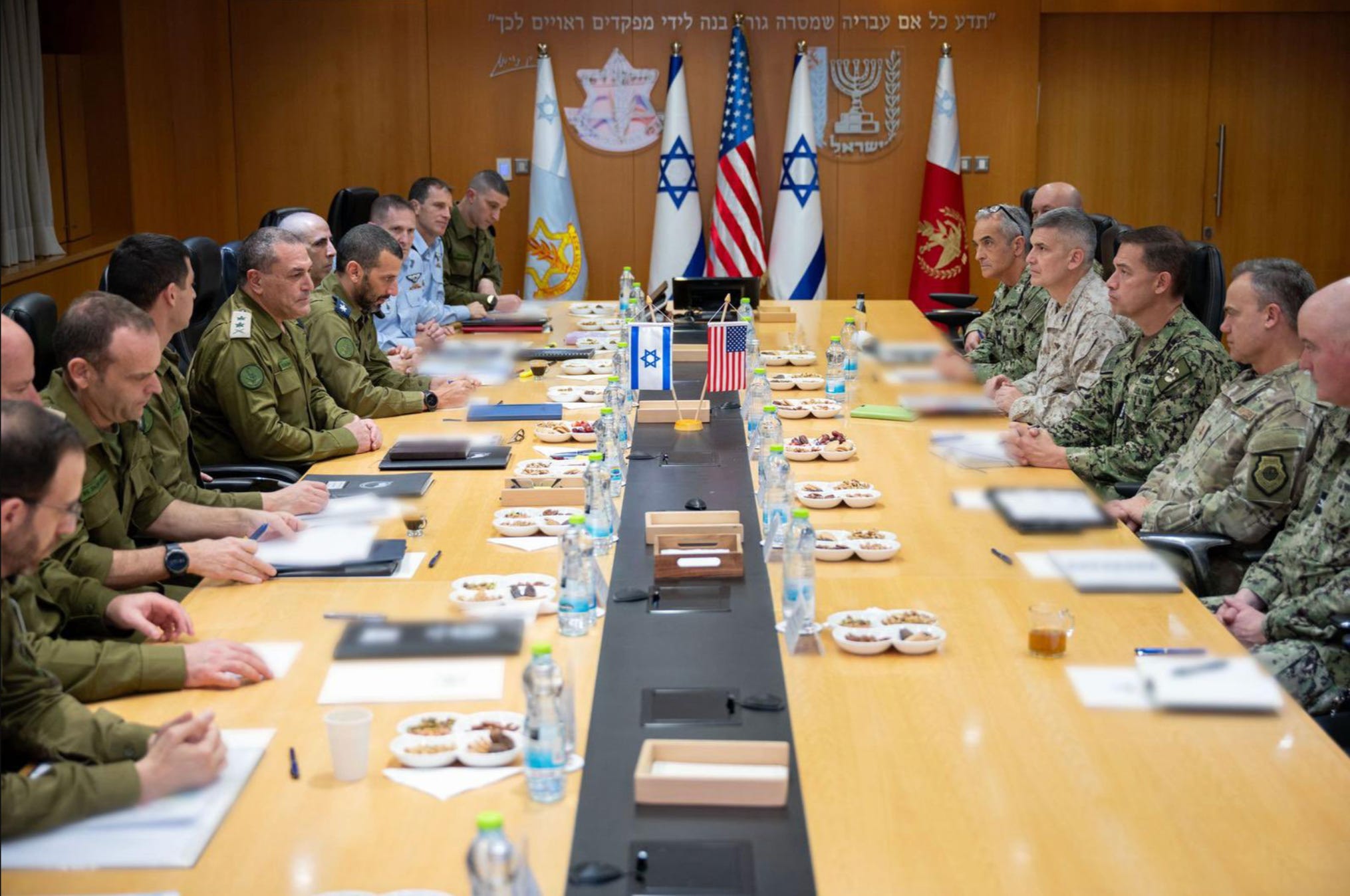
Photo: U.S. CENTCOM Commander Brad Cooper and IDF Chief of Staff Eyal Zamir with their respective staffs, by IDF via X.
Similar “working level” meetings occurred shortly prior to June’s “Twelve Day War” against Iran’s nuclear program. In short, this is beginning to look less like lobbying among allies and more like operational planning sessions.
The White House and Iranian leadership have been engaged in ongoing negotiations, presumably with the intention of preventing an all out war. Yet America’s “red line” demands include concessions that the Iranian regime is firmly unwilling to grant, such as a complete abandonment of nuclear enrichment, significant reductions to its ballistic missile program, abandonment of support for terror proxies, and significant changes to how the regime interacts with domestic protesters.
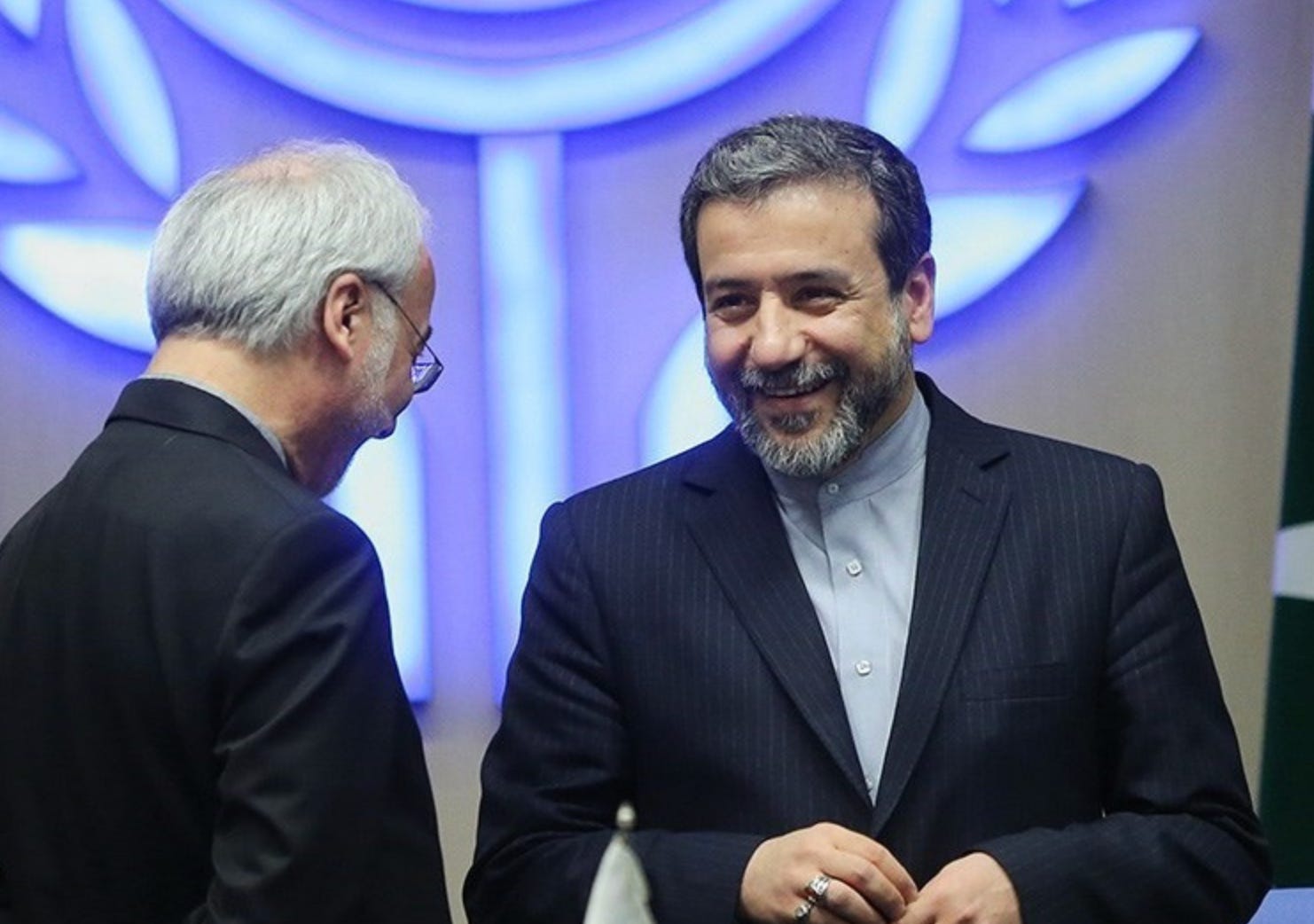
Photo: Iranian Foreign Minister Abbas Araghchi, who is representing Iran in the current negotiations with the U.S., by Tasnim News Agency via Wikipedia.

After the most recent negotiation session, both sides made positive public comments, even as the United States immediately implemented new sanctions, and began moving a second aircraft carrier into the region: the USS Gerald R. Ford, which is on its way to join the already present USS Abraham Lincoln. These actions stand in stark contrast to the generic, positive public comments about the negotiations. The U.S. force build-up “in theater” is now among the largest in history, and certainly larger than at any time other than during active warfare. Some of the assets deployed, such as KC-135 aerial refueling aircraft and E-11A BACN communications aircraft, are notoriously expensive to maintain in theater, as well as especially vulnerable when on the ground, and for that reason they are not typically deployed as a mere “show of force” or deception tactic.
Trump indicated last week that he had set a deadline of “within the next month” for negotiations to bear fruit, warning that if they don’t, the consequences for Iran would be “very traumatic” and that regime change would be “the best thing that could happen.” The last time Iran breached such a deadline last June, Israel immediately began its military operation against Iran’s nuclear facilities, with apparent U.S. approval.
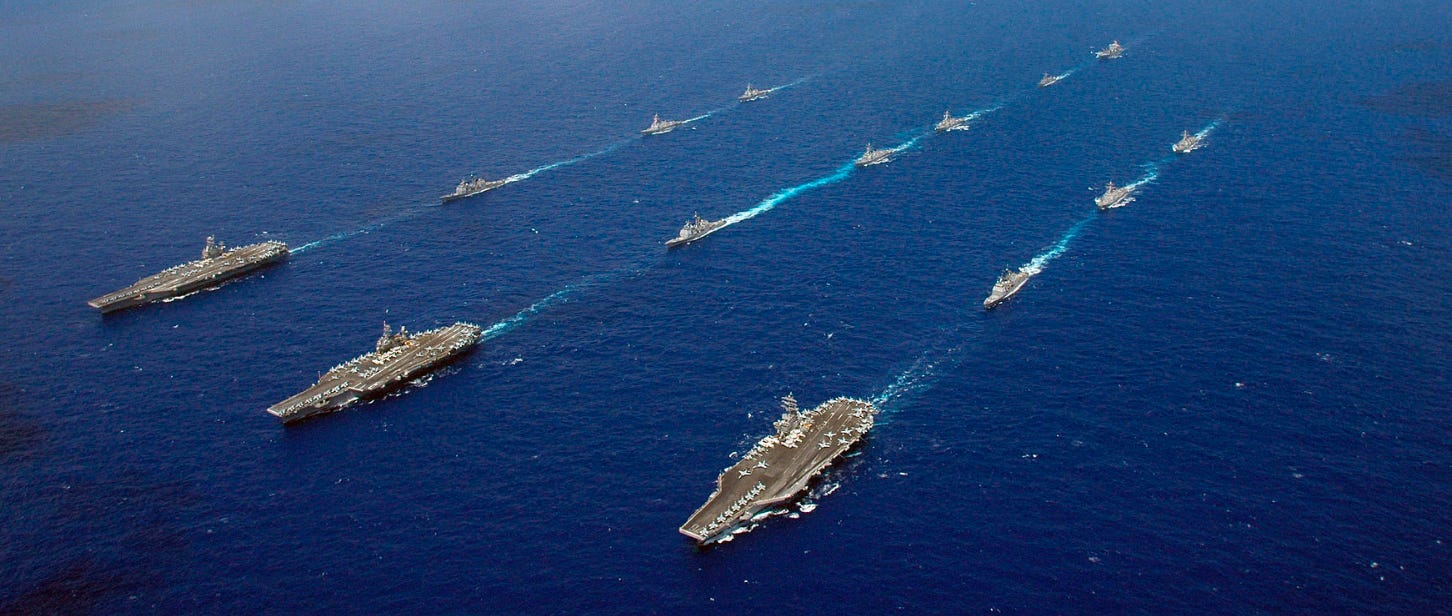
Photo: US Naval assets similar to those currently en route to the Iranian theater, by U.S. Navy via Wikipedia.

Why Iran, and why now?
All recent U.S. operations and international security priorities have one common thread: China and Russia.
Twelve Day War: It is well known that Israelis (including myself) fled to bomb shelters last June under a hail of Iranian ballistic missiles, as Iran targeted Israel’s major cities, hospitals and other civilian infrastructure. Less well known is that China provided Iran with its major missile components, and that Russian-made S300 air defenses provided much of Iran’s missile security. Since the “Twelve Day War,” China has been quietly working to re-arm the Iranian regime with ballistic missiles, while Russia is providing much of the technology and equipment that Iran is using in its massacre of protesters. China also provides the Iranian regime with most of its current funding, through oil purchases in violation of international sanctions.
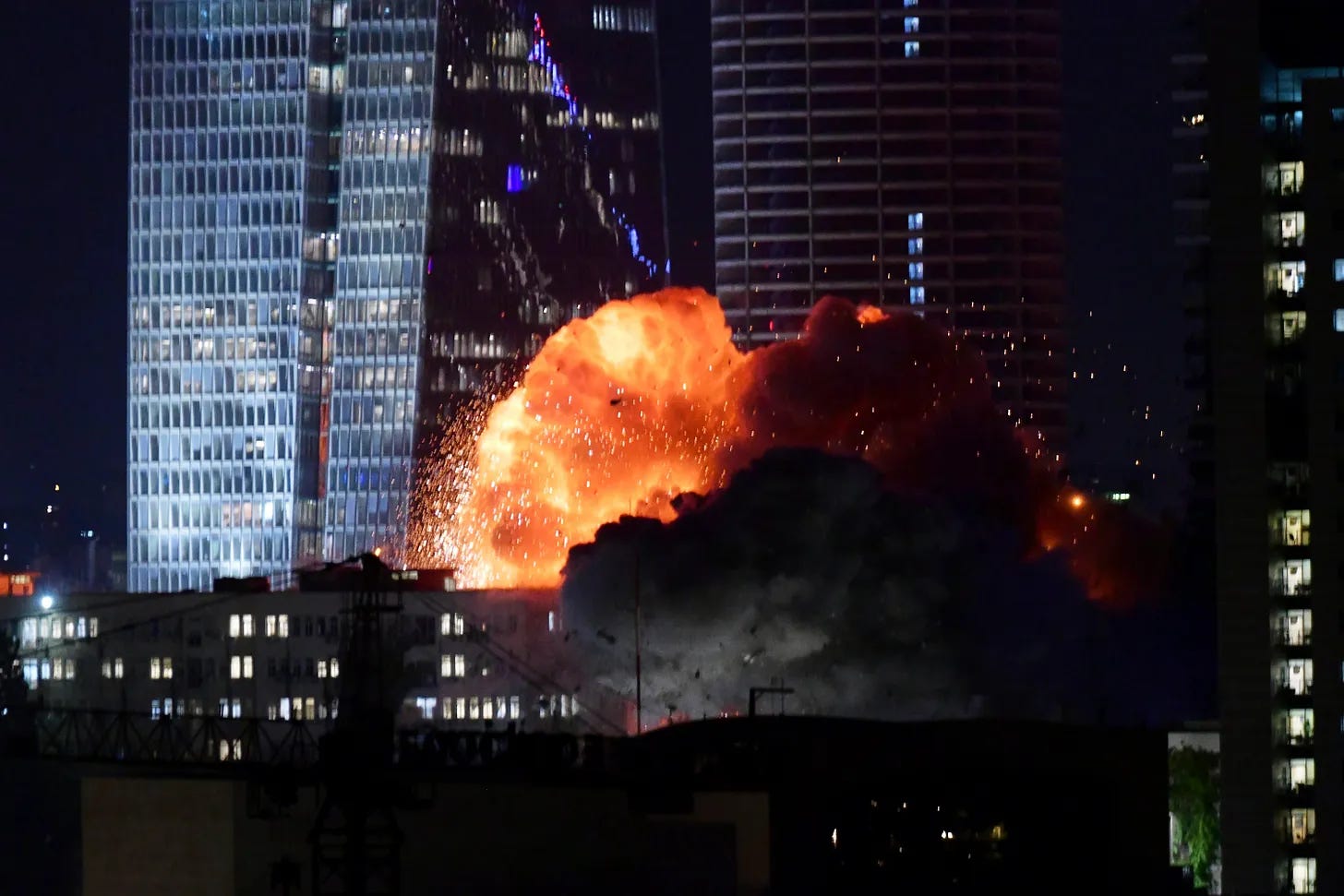
Photo: An Iranian missile strikes Tel Aviv on June 13, 2025: Tomer Neuberg/AP.
Greenland: The recent recriminations between the U.S. and Europe over Greenland occurred against a background of under-reported but growing Russian and Chinese efforts to take over the Danish controlled territory. If China or Russia were to gain control over Greenland, the very same Chinese missiles that Iran fired against Israel would be within range of America’s major population centers: including New York and Washington, D.C.
Venezuela: Prior to America’s capture of contested Venezuelan president Nicolás Maduro in January, the embattled country was effectively controlled by China and Russia, with assistance from Iran, Cuba, and Columbia, as well as the Hamas and Hezbollah terror organizations. Maduro served essentially as no more than a figurehead for these foreign powers, as emphasized by Venezuelan opposition leader and Nobel Laureate, María Corina Machado. Venezuela, like Iran, was well stocked with Chinese and Russian military hardware, capable of shutting down both Caribbean shipping lanes and the Panama Canal, which are essential to the U.S. economy. If China were to eventually supply Maduro with the same missiles it supplied to Iran, then Venezuela’s missile range would have extended to the Gulf of America (Gulf of Mexico), as well as to parts of the mainland southern United States.
What will the U.S. do?
It is impossible to know from public statements and new analysis what the United States and its allies will do in Iran. However, one thing has become clear over the past year: the United States armed forces, the Israeli IDF, and other U.S. allies have capabilities unknown to the general public. The capture of Maduro from under the nose of his own military, the precise targeting of Iran’s ballistic missile commanders and top nuclear scientists in the very first minutes of Israel’s operation, the U.S. destruction of Iran’s nuclear facilities hundreds of feet underground, and the exploding pagers in Lebanon last year, are just a few examples of capabilities never before thought possible. If the U.S. decides to act in Iran, one should expect the unexpected.
As in any warfare scenario, the United States is closely coordinating with allies, such as Israel, NATO, CENTCOM partners and others. The White House has also expressed humanitarian concern for Iranian protesters. Yet in the end, Iran’s connection to Chinese and Russian military ambitions poses a direct security threat to the United States itself. “America First” does not mean “America alone,” and in this case, the U.S. President is coordinating with allies to protect America’s own vital security interests at home.